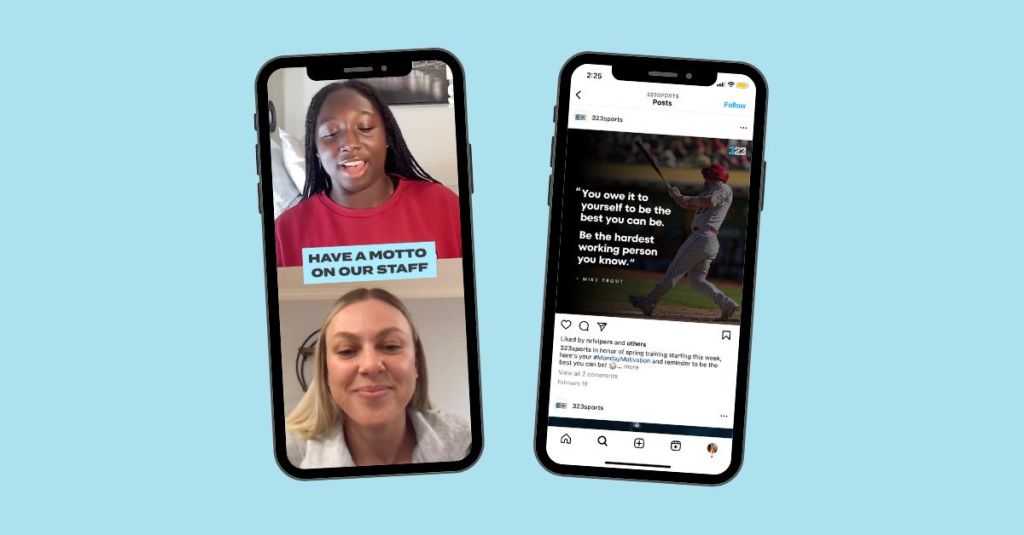
Digital marketing is a fast-paced industry. Sometimes, in the rush to keep up with social/digital trends, marketers and designers may overlook accessibility features.
While scrolling on social media might be fun for many people, it can be a difficult experience for those with disabilities or individualized needs. Pew Research reports that 62% of Americans with disabilities own a desktop/laptop, and 72% own a smartphone. Due to disabilities, it’s clear that much of a brand’s audience relies on accessible social media content to drive results.
But what is accessible social media? According to Sprout Social, it’s “the practice of designing and developing social media content and posts that provide a smooth, inclusive experience for everyone.”
Accessibility on social media provides a win-win experience for both a brand and its audience. By producing content that’s accessible to all, you can drive engagement for your brand while showing your audience that they’re seen and heard.
Accessibility in design
There are several ways to design accessible graphics for your social media channels.
First, providing good contrast between text and backgrounds is essential to making sure all users can understand your visuals, especially those with low vision or colorblindness. “When a low-vision or colour blind user can’t see colours or perceives them differently, the power of your message can be diminished, or worse, your content may not be understandable,” according to University of Greenwich. Distinguishing information using hierarchy, weight, and style allows a viewer to understand your message regardless of their visual abilities.
Bouncing off of that, using comprehensible typography ensures that your message won’t get lost. Princeton University says that “Users with reading and attention disorders may struggle to read content if distractions pull their focus from the content or font choices increases their cognitive load.” To avoid this, Accessibility Digital recommends using font size larger than 16px, comfortable line length, and clear, legible typefaces.
It’s also important to make sure your designs are visible on both mobile and web devices. Create designs that are adaptable regardless of screen size and orientation to allow your entire audience to understand your message.
Accessibility on social media
Whether you’re posting on Instagram, X, Facebook, or LinkedIn, adding alt text to your images allows people to visualize images if they’re unable to see them. Hootsuite explains that “it’s important to add alt text, as accessibility tools read them to describe images for users. Leaving it blank will cause a screen reader to announce it as ‘image,’ creating a poor experience.” Describing your image using concise, informative language allows all users to interact with your visual content.
In a similar vein, writing accessible captions helps those with screen readers understand your brand’s messaging. When using long hashtags, use “CamelCase” – capitalizing the first letter of each word so the screen reader can decipher them. Additionally, using creative typography might be fun as a writer, but they’re basically illegible for screen readers and other assistive devices.
Lastly, adding closed captioning will allow all users to engage with your video content, regardless of their hearing abilities. Make sure that when you add your own captions, you’re putting them in a spot that isn’t blocked by the features/captions on Reels or TikTok. Many people watch videos with the sound off, especially in busy areas, so closed captioning benefits everyone. “Everyone” even includes your business, as a Chatterblast study reports that about 78% of conversions occurred on videos with the sound off.
Overall, designing and publishing accessible content allows your brand to reach an even broader audience.
Alexa Heinrich, creator of Accessible Social, puts it best, “Creating accessible social media means ensuring that everyone can access your content. No matter their physical or cognitive abilities.”
 Lindsey Komson
Leave a comment