We’re living in a world of information overload.
We have access to any and every piece of information at our fingertips. Between social media, online news outlets, and nonstop communication with friends and family, we’re taking in so much information in any given moment. But how can we be expected to retain any of it when there’s so much in front of us?
The answer – visual communication.
Reading words is one thing. But images, videos, graphs, and other visual elements are what help people understand and retain information. Canva explains that without even realizing it “you likely encounter some form of visual communication every day, from the emoji in that email your colleague sent you, to the poster in the bathroom.”
Incorporating visual communication into your marketing strategy will allow consumers to understand your brand and its messages. Here’s why.
What is visual communication?
You might be asking, what even is visual communication? According to Library at University of Hull, visual communication is “the practice of using pictures, graphics and other visual elements to convey information and ideas.” HubSpot adds that visual communication also exists to express ideas and/or invoke emotions.
Let’s look at two examples.
- You just bought a new, complex Lego set. Would you be able to put it together if the instruction manual only had words explaining what to do?
Probably not – the graphics on each page are what helps you put it together. That’s visual communication. - You’re walking down a city street and you see a billboard with a pie chart on it. The chart shows the percentage of people experiencing homelessness in your city.
It’s one thing to read a number, but it’s another to see the percentages relative to one another. The billboard invoked an emotion – that’s visual communication.
So why visual communication over written/oral?
“These tools have the power to transform complex information into clear, engaging, and memorable visual narratives,” according to Walk the Room.
There’s also scientific evidence that people are more likely to retain information from visuals than text.
“According to the theory of the picture superiority effect, humans are able to decipher visual information 60,000 times faster than text. The human brain is wired in such a way that handling visual information is easier for it. As a result, images are more likely to be remembered than words.”
Another reason brands should take advantage of visual communication is because graphics can be understood by anyone, regardless of their background or the language they speak. “Visual communication has the potential to transcend language barriers. Certain visual elements, such as symbols, icons, and gestures, can be universally recognized and understood across different cultures and languages. This makes visual communication a powerful tool for global communication and reaching diverse audiences.”
How to incorporate visual communication into your marketing materials
The opportunities for using visual communication are limitless. Here are a few tools to use in your next campaign:
- Charts and graphs
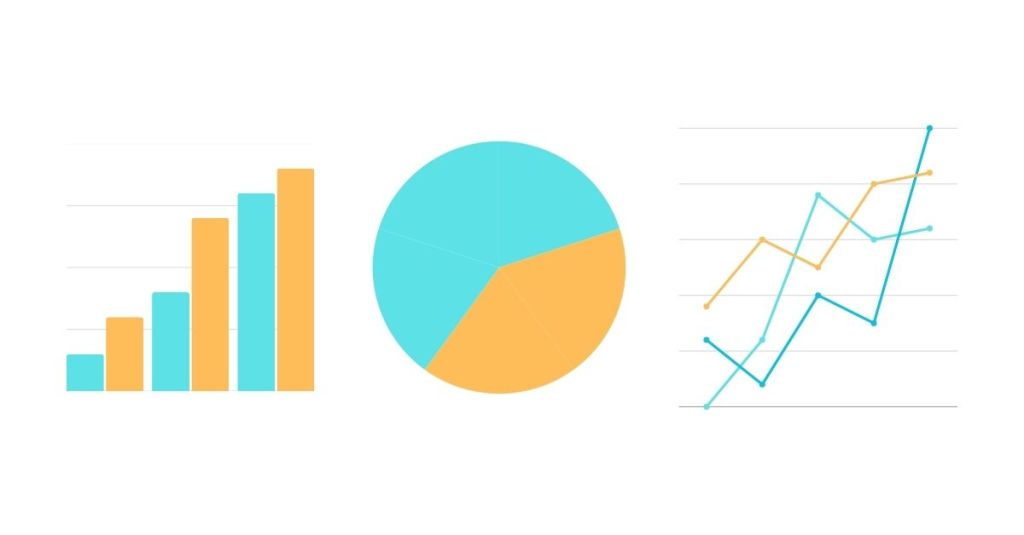
People won’t stop to read a huge, complex data table, but “turning the data into a visually appealing pie chart or bar graph can quickly convey the same information in an easy-to-digest manner.”
- Infographics
According to HubSpot, “infographics are one of the most powerful visual communication tools marketers use.” There’s endless potential in using infographics to convey information.
- Maps
If your business exists in more than one area, maps are a great tool to show consumers where you operate. Whether you’re giving directions or showcasing nearby attractions, maps are a great visual communication tool.
Using visual communication in your marketing materials will have such an impact on your audiences. Remember, visual communication is everywhere – the sooner you create these materials for your brand, the sooner you’ll start seeing their impact.
 Lindsey Komson
Leave a comment