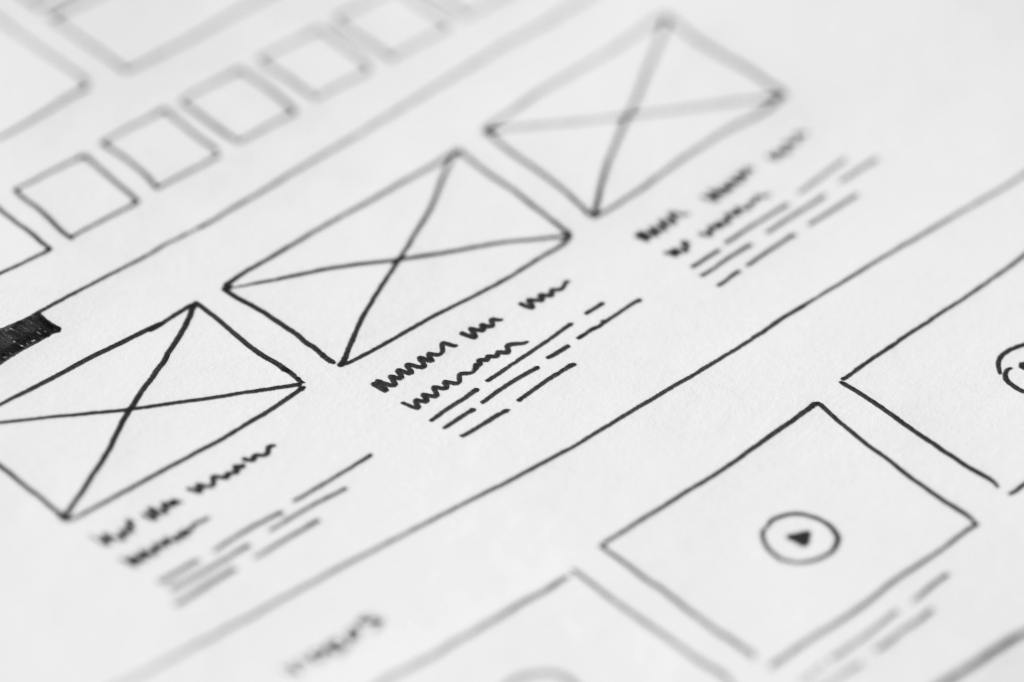
Photo by picjumbo.com
As a young designer, you must understand the importance of creative problem solving. Whether it’s a design problem or anything else you encounter in life, you’ll need to be able to solve complex problems.
That’s where the Design Thinking Process comes in. According to the Interaction Design Foundation, “Design thinking is a non-linear, iterative process that teams use to understand users, challenge assumptions, redefine problems and create innovative solutions to prototype and test.” The CEO of the Interaction Design Foundation, Tim Brown, adds that it’s a “human-centered approach to innovation that draws from the designer’s toolkit to integrate the needs of people, the possibilities of technology, and the requirements for business success.”
The Design Thinking process is important for many reasons, but two that I find most important is that it fosters innovation and it’s a concrete process. This process fosters innovation because it forces you to think outside of the box. It prompts a designer to go beyond what already exists and form new solutions to existing problems.
So what is the design thinking process?
There are 5 steps to the Design Thinking Process: Empathize, Define, Ideate, Prototype, and Test. Let’s look more in depth at each step.
- Empathize
The empathize step involves gaining understanding of the design problem you want to solve. During this time, it’s helpful to engage with users and understand how they experience the problem you’re looking to solve. - Define
After empathizing with your users, use the information you gained to define a problem. Create a problem statement that acknowledges the challenge, who it impacts, and why. Then, writing a “How Might We?” statement opens the door for the next step… - Ideate
By looking at the problem/How Might We statements, you can create different solutions that satisfy the problem. During this step, people use many brainstorming techniques that generate ideas in groups. A personal favorite of mine is Crazy 8’s, where you give yourself a set amount of time and need to sketch 8 ideas for the same concept. - Prototype
Once you have several ideas, identify the best possible one(s) and create scaled down versions. For web design, this could involve Figma, for social media design, use Photoshop/Illustrator, etc. This gives the designer an idea of any problems they may encounter and how users will behave, think, and/or feel when using the product. - Test
Finally, share the finished prototype with users to see how they interact with it.
Design Thinking is not a linear process!
Based on user feedback, you may need to go back to the ideate or prototype steps. The process works in a way that you can really go back to any part of the process in a seamless way to adjust your solution.
Using Design Thinking to solve practical problems
This process can be applied to any creative task, but also any problem you encounter in life. There are a lot of similarities between design and life, as you’ll see throughout your career, and mastering this process will suit you well in work and life.
By empathizing with users, defining a problem, ideating potential solutions, creating prototypes, and testing solutions, you’re able to solve any creative problem that comes your way.
Remember to embrace the process, as it will develop your creativity, help you build empathy, and allow you to create creative solutions to problems. This process is important to every designer, but especially those just beginning their careers. Soon enough, these 5 steps will become second nature, and you’ll be a master at solving complex design problems.
 Lindsey Komson
Leave a comment