By conducting a SEO content analysis, you hold the keys to making your website searchable, accessible, and enjoyable to all.
What’s a content analysis?
According to seoClarity, a SEO content analysis is “the process of evaluating content (both new ideas and existing assets) for factors that can help or deter its organic performance.”
Organic performance refers to the order that search engines rank content in. For example, if you work for the New York State DMV, when people Google “New York DMV,” the first website that comes up is the New York State Department of Motor Vehicles website.
While the DMV is a pretty popular search, not all websites are ranked highly on search engines like Google, Bing, Yahoo, etc. Conducting a SEO content analysis allows you to understand the content currently on a website, analyze what’s driving clicks and what’s not, and make changes to boost your website’s searchability.
How can I perform a content analysis?
There are several software that can aid in conducting a SEO content analysis. I’ve used Screaming Frog SEO Spider and WAVE in a content analysis of mine, and I find these tools very effective.
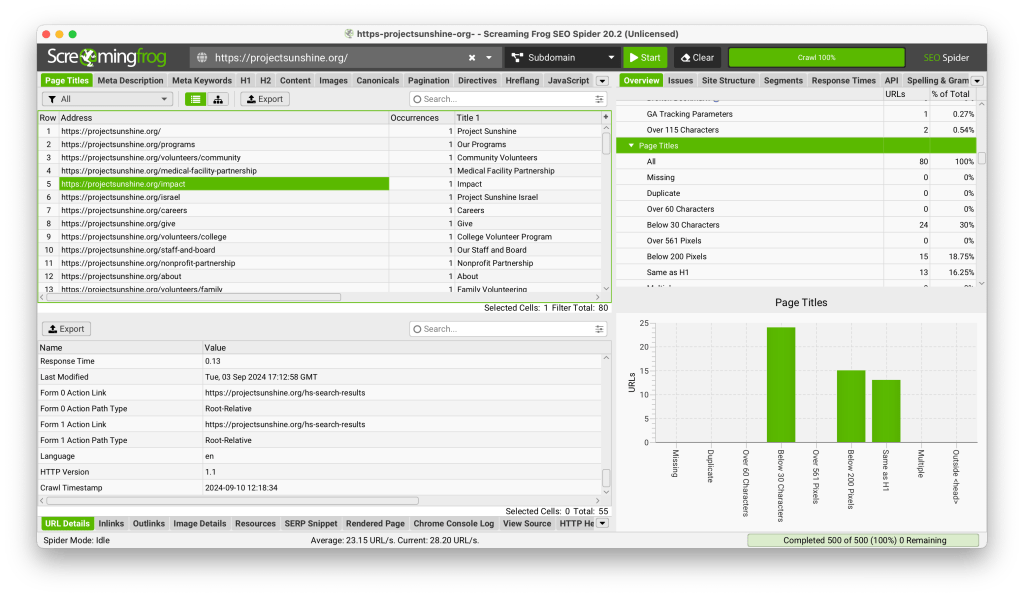
Screaming Frog SEO Spider allows you to analyze various elements of a website, including page titles, headers, metadata, accessibility functions, and more. It provides a list of all elements that exist on the site and synthesizes the data into charts and graphs to easily understand the results.
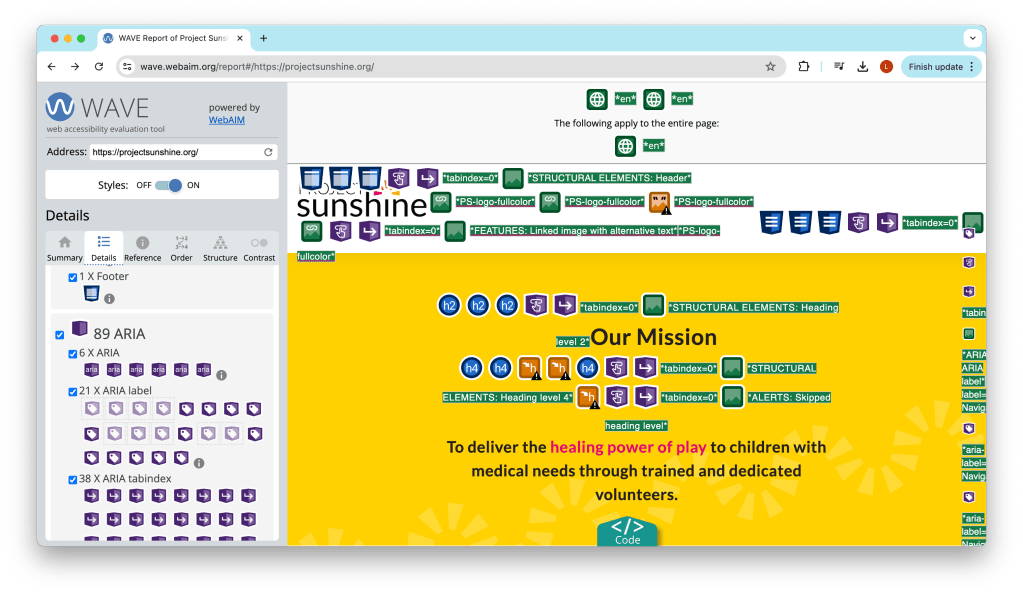
WAVE, web accessibility evaluation tool, provides visuals and alerts to show how specific elements on each page help or hurt users. The tool flags contrast errors, alerts, positive site features, structural elements, and ARIA properties.
Project Sunshine: content analysis in practice
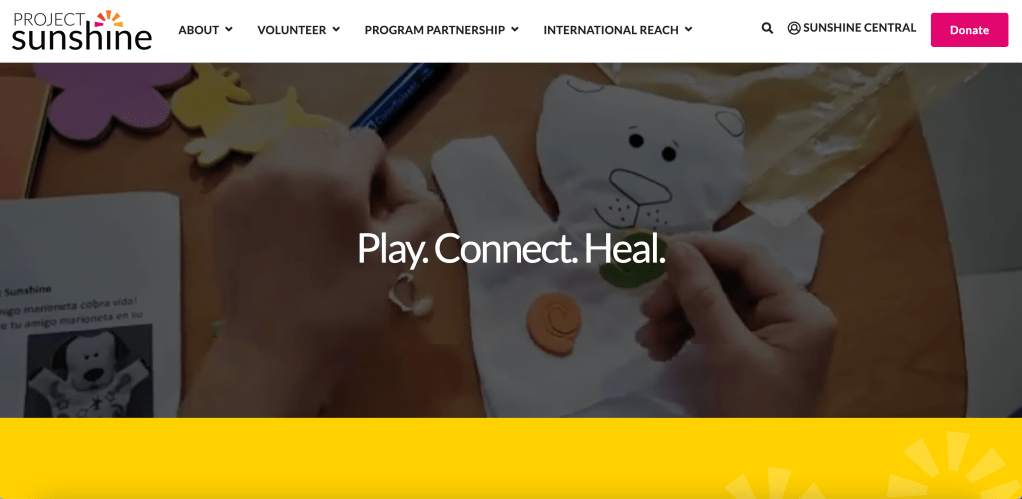
To put all I’ve learned about content analysis into practice, I chose to conduct one on the nonprofit organization, Project Sunshine. Project Sunshine’s mission is “to deliver the healing power of play to children with medical needs through trained and dedicated volunteers.”
After running the Project Sunshine website through Screaming Frog SEO Spider and WAVE, here are some of the insights I’ve collected:
Page Titles
- Unique, descriptive page titles for most pages
- However, some overlap and might provide more clarity to users if they were differentiated
Metadata
- Almost all the pages have a unique meta description
- Only 6.25% of meta descriptions are duplicates and 5% are missing
- While some are very descriptive and supplement the page titles nicely, others are just a repeat of the page title
Headers
- Project Sunshine’s website makes use of H1 and H2 header elements, but not all describe the page they exist on
Accessibility
- Of all 191 images across Project Sunshine’s website, only 3% were missing the alt attribute
- All other images had alternative text, which is great for those with screen readers.
- However, most, if not all, had alt text that reflected the file name. For example, a photo of a girl doing arts and crafts has the alt text “emilia-canva-website-edit-image.” Alt text should describe the image to benefit those using screen readers or other assistive technologies, so this is an important fix.
View my full content analysis report here:
 Lindsey Komson
Leave a comment